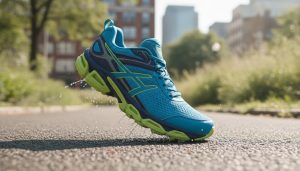


The softest, most cushioned shoe on the shelf might actually be the wrong choice for your chronic foot pain. When you’re staring at the retail wall, the choice of Hoka vs Brooks often comes down to a simple decision between cloud-like impact absorption and structural biomechanical guidance. You’ve likely felt that late-afternoon throb in your arches or the sharp sting of Plantar Fasciitis, and you simply want a solution that supports your 10,000 daily steps. We understand how exhausting it is to search for relief while feeling overwhelmed by maximalist trends and conflicting advice.
You deserve a shoe that respects your unique foot shape and accommodates your custom orthotics without compromise. This guide will help you discover the critical differences between Hoka’s signature cushioning and the reliable stability Brooks provides. We’ll compare the latest 2026 releases, including the Hoka Clifton 11 and the Brooks Ghost 18, to help you decide which brand will truly protect your joints and keep you moving comfortably throughout your busy day.
Key Takeaways
- Understand how Hoka’s signature rocker geometry and maximalist cushioning compare to Brooks’ focus on biomechanical stability and traditional heel-to-toe drops.
- Learn why the debate of Hoka vs Brooks is essential for managing conditions like Plantar Fasciitis or chronic joint fatigue during long work shifts.
- Discover which 2026 foam technologies, such as Hoka’s ProflyX or Brooks’ DNA Loft v3, provide the most resilient support for your specific arch type.
- Evaluate how different shoe shapes and wider toe boxes accommodate custom orthotics to ensure 10,000 plus steps of pain-free movement.
- Follow our expert checklist to determine if your gait requires the soft impact absorption of a super trainer or the grounded guidance of a traditional stability shoe.
Understanding the Footwear Philosophy: Hoka vs. Brooks
Choosing between Hoka vs Brooks requires looking past the colors and logos to the engineering beneath your feet. While both brands dominate the performance market, they approach foot health from opposite directions. Hoka focuses on diverting impact through volume and geometry, while Brooks emphasizes the natural path of your body’s movement. By 2026, the lines have blurred slightly as Brooks introduces softer foams and Hoka refines its stability frames, but their core identities remain distinct.
The Hoka Maximalist Revolution
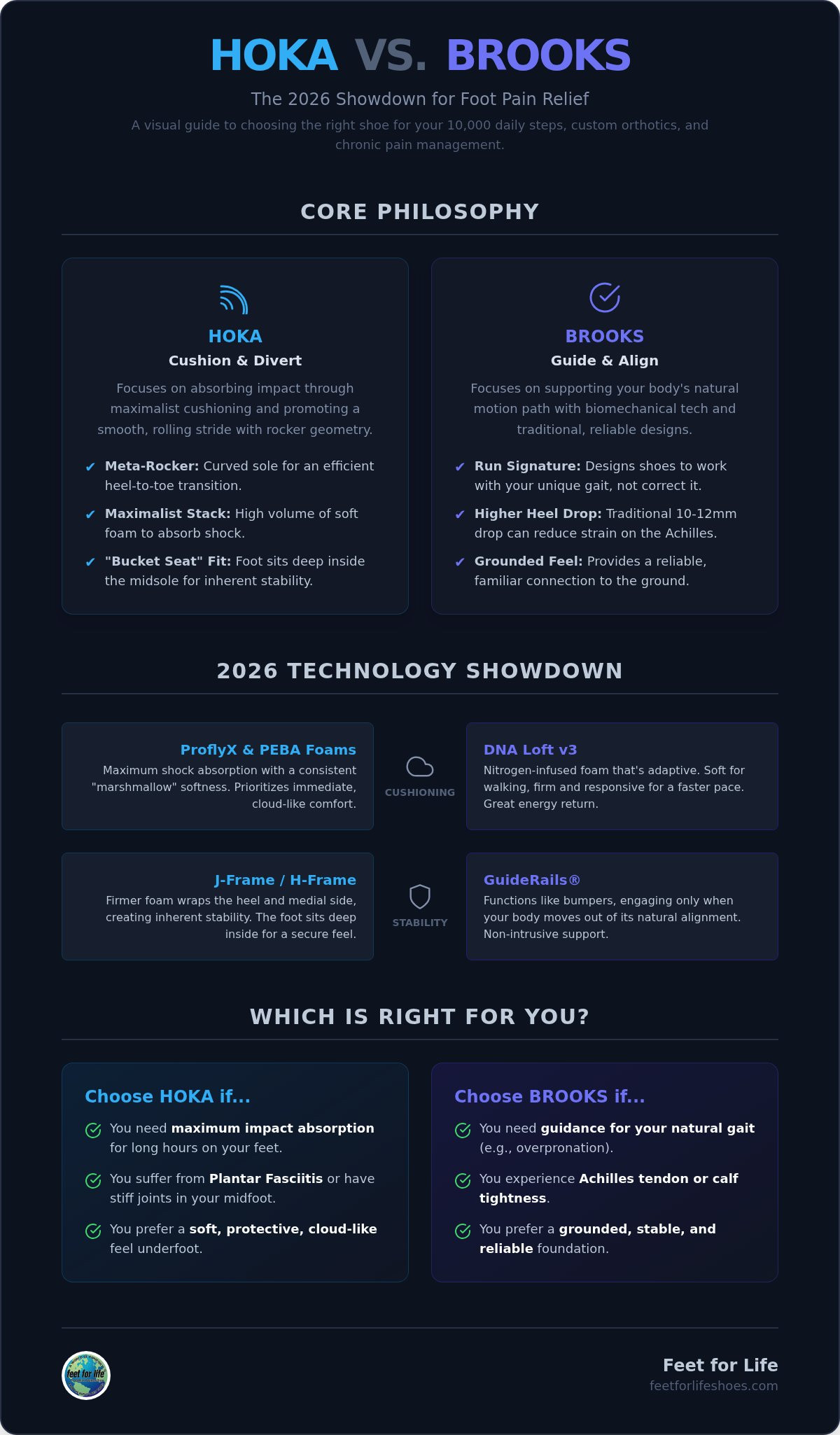
Hoka changed the industry by proving that a thick midsole doesn’t have to be heavy. Their philosophy centers on the Meta-Rocker, a curved sole designed to act like a rocking chair for your foot. This geometry encourages a smooth transition from heel to toe, which is particularly helpful if you have limited mobility in your big toe or midfoot. People often worry that a high stack height feels like walking on stilts, but Hoka counters this with a wide, flared footprint. This design creates a “bucket seat” for your foot, providing a deep, protective “marshmallow” feel that absorbs the repetitive shock of 10,000 daily steps without sacrificing a stable base.
The Brooks Biomechanical Tradition
Brooks takes a more traditional approach, rooted in a century of Brooks Sports history and biomechanical research. Their philosophy, known as “Run Signature,” suggests there is no single right way to move. Instead, they design shoes that support your body’s preferred motion path. Brooks models typically feature a higher heel-to-toe drop, often between 10mm and 12mm, which can reduce strain on the Achilles tendon and calves. Their engineering focuses heavily on the relationship between the foot and the knee, ensuring that your footwear doesn’t force you into an unnatural alignment. It’s a grounded, reliable feel that many long-time walkers and runners find reassuring.
Your gait is the ultimate tie-breaker. If you prefer a rolling motion that takes the work out of your stride, Hoka’s geometry is likely your best match. If you want a grounded, reliable feel with a traditional lift that protects your lower legs, Brooks remains the gold standard. Understanding these structural differences is the first step toward finding a shoe that feels like an extension of your own body rather than a corrective tool. Your choice should reflect whether you need the shoe to guide your movement or simply cushion the impact of your natural stride.
The 2026 Technology Showdown: Cushioning and Stability
The technical evolution of Hoka vs Brooks has reached a peak in 2026, with both brands utilizing advanced chemical engineering to protect your feet. While Hoka remains the leader in high-volume stack heights, Brooks has narrowed the gap by introducing nitrogen-infused foams that offer a plush feel without the bulk. Choosing between them now requires a closer look at how their specific cushioning and stability systems respond to your unique body weight and stride intensity.
Cushioning: Softness vs. Energy Return
Hoka’s 2026 lineup, including the Clifton 11, relies heavily on ProflyX and new PEBA-based foams. These materials are designed for maximum shock absorption, creating a “marshmallow” landing that significantly reduces joint fatigue during 10,000 plus step days. It’s a consistent, soft experience from the first mile to the last. Brooks, however, uses DNA Loft v3 and DNA Flash v2 technology. This nitrogen-infused foam is adaptive; it stays soft when you’re walking gently but firms up to provide energy return when you pick up the pace. While both brands typically offer a lifespan of 300 to 500 miles, Brooks’ DNA Loft v3 tends to retain its structural integrity slightly longer for heavier strikers, whereas Hoka’s lighter foams prioritize immediate, cloud-like comfort.
Stability: Controlling the Gait
Stability technology has shifted away from hard plastic posts toward more natural guidance systems. Brooks utilizes GuideRails technology, which functions like bowling alley bumpers. These integrated supports only engage when your foot moves out of its natural alignment, making them ideal for both neutral walkers and those who overpronate. Hoka takes a different approach with its J-Frame and newer H-Frame systems. Instead of “bumpers,” Hoka uses a firmer foam wrap around the heel and medial side, combined with an active foot frame that sits your foot deep inside the midsole rather than on top of it. This “bucket seat” feel provides inherent stability that works well for those with wider feet or those who require a more secure lockdown for custom orthotics.
Weight remains a critical factor for daily comfort. By 2026, both brands have achieved ultra-light performance through engineered mesh uppers that balance breathability with a secure midfoot lockdown. For instance, the Brooks Hyperion Elite 6 weighs a mere 6.9 oz, while the Hoka Mach 7 weighs approximately 8.37 oz for men. These weight savings mean less strain on your hip flexors and ankles over long hours of standing. If you’re unsure which technical specs match your arch height, a professional footwear assessment can help you identify the foam density that best supports your specific gait.
Solving Common Foot Pains: Plantar Fasciitis and Beyond
Living with chronic foot pain turns every step into a calculated risk. Whether you’re battling the sharp morning sting of Plantar Fasciitis or the dull ache of mid-day joint fatigue, the choice between Hoka vs Brooks can be your most effective form of daily therapy. Both brands offer specialized engineering to offload pressure, but they target different anatomical needs. By 2026, these manufacturers have refined their designs to address not just the foot, but the entire kinetic chain from the ankle to the lower back.
The Best Brand for Plantar Fasciitis
Hoka is often the primary recommendation for Plantar Fasciitis because of its early-stage Meta-Rocker geometry. By creating a curved sole, the shoe does the work of rolling the foot forward, which minimizes the stretching and pulling of the plantar fascia ligament. This mechanical assist is a game-changer for those with acute inflammation. Brooks, however, provides a different kind of relief. Models like the Adrenaline GTS 25 feature a robust, structured heel counter that locks the calcaneus in place, preventing the micro-shifts that aggravate the heel. If you want a deeper look at these specific stability features, check out The Ultimate Guide to Brooks Running & Walking Shoes for a model-by-model breakdown.
Accommodating Orthotics and Insoles
Finding a shoe that plays well with medical-grade inserts is crucial for long-term health. Hoka shoes generally offer a higher internal volume and a wider “bucket seat” design, making them excellent for thicker, custom-made orthotics. The deep foot frame ensures your foot doesn’t sit too high in the shoe once the insert is added. This is especially important for maintaining a secure heel lockdown, which can be a challenge when adding height to the footbed.
Many specialists recommend pairing a neutral Brooks shoe with Powerstep insoles. This combination allows the medical-grade arch support of the Powerstep to provide the correction, while the Brooks midsole handles the shock absorption and durability. It’s a powerful duo for those with flat feet who need more than just a standard stability shoe. When integrating these tools, always ensure the orthotic sits flat against the strobel board to maintain the shoe’s intended geometry. This prevents the insert from negating the nitrogen-infused cushioning or the GuideRails system. For those managing arthritis, the maximalist cushioning of Hoka provides a soft barrier against ground impact, while Brooks offers the predictable alignment needed to protect sensitive knee and hip joints.
Hoka vs. Brooks for Daily Life: Walking and Standing
Most shoe reviews focus on the marathon, but the real test happens during an eight-hour shift on concrete or a long afternoon at the park. When comparing Hoka vs Brooks for daily life, the winner depends on whether you need a shoe that acts as a shock absorber or one that provides a consistent, structured platform. By 2026, both brands have moved beyond bulky silhouettes to offer sleek designs that transition seamlessly from a professional environment to a casual weekend.
In the “Standing All Day” test, foam compression is the primary concern. Hoka’s supercritical EVA foams offer unparalleled initial comfort, which feels like an immediate relief for swollen feet. However, for those standing on hard surfaces for 8 plus hours, Brooks’ nitrogen-infused DNA Loft v3 often holds its shape better. It provides a more resilient “push back” against the ground, preventing the “bottoming out” sensation that can lead to dull aches in the arches by quitting time. This durability makes Brooks a reliable choice for heavy strikers who find that softer foams lose their bounce too quickly.
The Best Walking Shoes for Seniors
Balance and stability are non-negotiable as we age. Hoka’s flared midsole and wide base create a generous platform that helps maintain your center of gravity, which is essential for fall prevention. Conversely, many Brooks walking models prioritize slip resistance and a more traditional ground feel, allowing for better proprioception; that is your body’s ability to sense its position and movement. Both brands excel at reducing lower back pain by providing significant heel cushioning that dampens the vibrations traveling up the spine with every step. Choosing between them often comes down to whether you prefer Hoka’s rolling rocker motion or the grounded, flexible feel of a Brooks trainer.
Occupational Footwear: Standing on Hard Surfaces
Professionals in healthcare and retail often face the brutal reality of concrete floors. Hoka has become a staple for nursing shoes because its rocker sole assists with the constant forward motion of a busy ward, effectively reducing leg fatigue. Brooks remains a favorite for restaurant workers and teachers who require a more structured support system to maintain natural body alignment. If you’re ready to upgrade your work-day comfort, you can browse our curated selection of professional footwear to find your perfect match.
By 2026, the “dad shoe” stigma has vanished. Modern iterations of the Hoka Arahi 8 and Brooks Adrenaline GTS 25 feature refined uppers that look as good with scrubs or chinos as they do with athletic wear. These 2026 models prioritize breathability, ensuring your feet stay cool even during high-activity shifts. This aesthetic shift means you don’t have to sacrifice your personal style to protect your long-term foot health. Whether you’re walking 10,000 steps on a trail or standing at a retail counter, there’s now a performance shoe that fits the dress code.
Making the Choice: How to Find Your Perfect Fit
Deciding between Hoka vs Brooks isn’t just about picking a favorite aesthetic; it’s about matching a technical tool to your body’s specific mechanics. While the 2026 models offer incredible technology, the best shoe is the one that disappears on your foot during your daily activities. Finding that match requires a systematic approach that looks beyond marketing and into the reality of how you move. We believe that an informed decision is the first step toward a life without chronic foot pain.
Your Selection Framework
To narrow down your options, we recommend a simple three-point checklist. This framework helps you move from a point of confusion toward a logical, supportive conclusion for your foot health.
- Step 1: Identify your primary activity. Are you primarily running, which involves high-impact strikes, or walking, which requires a smoother heel-to-toe transition? Hoka’s rocker geometry excels at the latter, while Brooks offers a grounded feel for both.
- Step 2: Determine your arch height and stability needs. If you have flat feet, you’ll likely benefit from Brooks’ GuideRails. If you have high arches and need maximum shock absorption, Hoka’s stack height might be the better fit.
- Step 3: Consider your history of joint pain. If you’ve struggled with knee or lower back fatigue, the “marshmallow” cushioning of Hoka can provide immediate relief. If your pain is related to overpronation, the structural integrity of Brooks is often the solution.
Never buy a performance shoe based on your usual size alone. Hoka often features a wider toe box and a deeper foot frame, which can make them feel roomier than a Brooks model of the same size. When you’re testing shoes, check the flex point; the shoe should bend exactly where your foot naturally flexes at the metatarsals. Perform a heel lock test by walking a few paces to ensure your foot doesn’t slip, especially if you plan to use custom orthotics or Powerstep insoles.
The Importance of a Professional Fitting
Online reviews are a helpful starting point, but they can’t replace a physical gait assessment. A professional fitting ensures your 2026 Brooks or Hoka pair lasts its full 300 to 500 mile lifespan by ensuring the wear pattern matches the shoe’s design. At Feet for Life, we act as a bridge between specialized health requirements and your everyday preferences. We curate the best from both brands to ensure you find a pair that supports your long-term wellness. Don’t leave your comfort to chance; find your perfect fit at Feet for Life today and take the first step toward 10,000 pain-free steps.
Step into a Pain-Free Future
Choosing between Hoka vs Brooks doesn’t have to be a guessing game. By understanding the difference between Hoka’s signature rocker geometry and Brooks’ reliable GuideRails stability, you can select a tool that truly supports your daily movement. Whether you need the marshmallow-soft impact protection of a maximalist trainer or the grounded alignment of a traditional stability shoe, the right fit is essential for managing Plantar Fasciitis and joint fatigue.
As an authorized retailer for both brands, Feet for Life offers the expertise needed to navigate these technical choices. We specialize in foot health and orthopedic support, providing a wide selection of Powerstep insoles to further customize your comfort. Don’t let foot pain dictate your lifestyle. Browse the Latest 2026 Hoka and Brooks Collections at Feet for Life today to find the perfect pair for your 10,000 steps. You deserve to move with confidence and ease every single day.
Frequently Asked Questions
Do Hokas last longer than Brooks running shoes?
Both Hoka and Brooks running shoes typically offer a lifespan of 300 to 500 miles, depending on your gait and the terrain. While Hoka’s lightweight EVA foams provide immediate comfort, Brooks’ nitrogen-infused DNA Loft v3 often retains its structural integrity slightly longer for heavier strikers. To maximize the life of your footwear, we recommend rotating between two pairs, which allows the foam to fully decompress between your daily activities.
Which brand is better for high arches: Hoka or Brooks?
Hoka is generally the preferred choice for high arches because of its superior shock absorption. High arches often lack natural impact dampening, making the maximalist cushioning in models like the Clifton 11 essential for protecting your joints. While Brooks offers excellent neutral support in the Ghost 18, the high-volume stack height of a Hoka provides the deeper protective barrier that high-arched feet require during 10,000 plus step days.
Can I put my custom orthotics in Hoka shoes?
Yes, you can easily use custom orthotics in most Hoka models because of their deep internal volume and “bucket seat” design. The active foot frame ensures that your foot sits securely inside the midsole rather than on top of it, even after adding the height of an insert. When choosing between Hoka vs Brooks for orthotics, Hoka’s wider platform often prevents the insert from shifting, ensuring your support stays perfectly aligned.
Why are Hokas so much thicker than Brooks?
The thickness of Hoka shoes is a result of their maximalist design philosophy, which prioritizes high-volume cushioning to divert impact away from your joints. This high stack height works in tandem with their Meta-Rocker geometry to create a smooth, rolling transition. Unlike the more traditional, grounded feel of Brooks, the extra foam in a Hoka is engineered to act as a protective “marshmallow” layer that reduces the repetitive stress of standing.
Is Brooks or Hoka better for wide feet?
Both brands cater well to wide feet, but they approach the fit differently. Hoka models naturally feature a wider, more anatomical toe box that allows for natural toe splay. Brooks, however, offers a more extensive range of specific width sizes, including wide (D) and extra-wide (EE or 4E) options in their most popular stability models. If you have a broad midfoot, the flared base of a Hoka provides a very stable and accommodating platform.
Are Brooks shoes better for knee pain than Hokas?
Brooks shoes are often specifically recommended for knee pain because of their GuideRails technology. These supports act like “bowling alley bumpers,” keeping your foot in its natural motion path and preventing the rotational forces that stress the knee joint. While Hoka reduces the vertical impact that can aggravate joint pain, Brooks focuses on the biomechanical alignment between the foot and the knee to solve the root cause of many alignment-related issues.
How should Hoka shoes fit compared to my normal size?
Hoka shoes generally fit true to size, though they may feel roomier in the forefoot than your normal athletic shoes. Because of the wider toe box and the way the foot sits deep within the frame, you shouldn’t necessarily size up unless you are accommodating thick winter socks or specific medical inserts. We always suggest checking that the shoe’s flex point aligns with your foot’s natural bend to ensure the rocker geometry works correctly.
What is the best Brooks model for walking in 2026?
For 2026, the Brooks Adrenaline GTS 25 and the Brooks Ghost 18 are the top recommendations for walking. The Adrenaline GTS 25 is ideal if you require stability to manage overpronation, while the Ghost 18 provides a reliable, neutral platform for those with a standard gait. Both models feature nitrogen-infused cushioning that provides a resilient feel, making them perfect for professionals who spend long hours standing on concrete or hard floors.