


Have you ever finished a morning walk only to feel like your knees and hips are paying a heavy price for your progress? It’s a common frustration when the desire to stay active is sidelined by the sharp sting of plantar fasciitis or the persistent ache of impact-related fatigue. You shouldn’t have to choose between your daily movement and your physical comfort. This is why so many people rely on Hoka Clifton running shoes to maintain their health without the subsequent joint pain.
We understand that finding the right support is an investment in your quality of life. This guide reveals why the Clifton remains the gold standard for cushioned daily trainers, helping you reduce recovery time and transform your stride into a smooth, cloud-like experience that protects your joint health. We’ll examine the latest 2026 features, clarify the differences between various Hoka models, and show you how these shoes provide comfort whether you’re exercising or standing all day. You’ll also discover how pairing them with Powerstep insoles can provide the professional-grade arch support your feet deserve.
Key Takeaways
- Understand how the maximalist design balances soft landings with an energetic takeoff to create a smoother, more efficient stride.
- Learn the science behind how Hoka Clifton running shoes protect your knees and hips by absorbing impact without sacrificing structural responsiveness.
- Discover whether the versatile Clifton or the higher-volume Bondi is the better choice for your specific body type and daily activity requirements.
- Explore how the Meta-Rocker geometry alleviates strain on the plantar fascia and provides relief for conditions like Hallux Rigidus.
- Master professional fitting techniques and learn why pairing your shoes with Powerstep insoles can optimize your long-term foot health.
What Makes Hoka Clifton Running Shoes a Modern Classic?
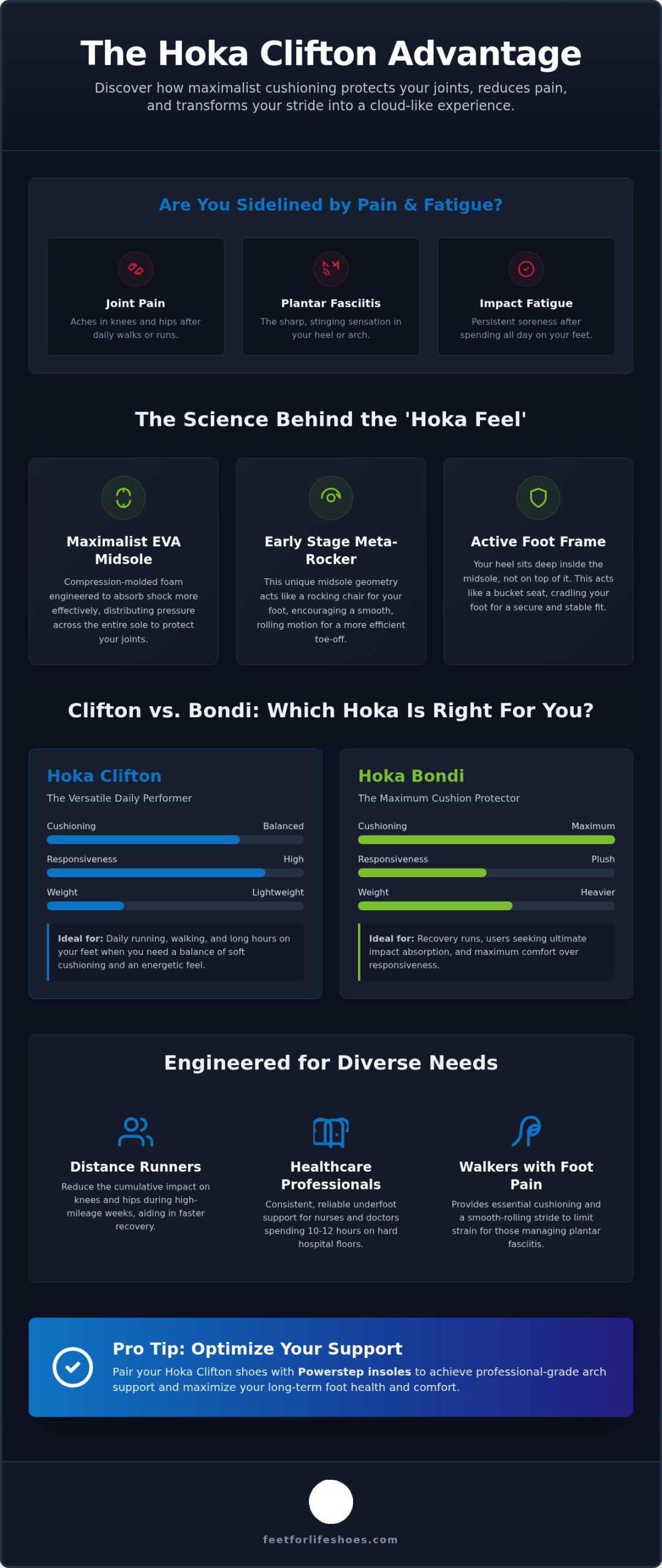
The Clifton has earned its reputation by proving that high-volume cushioning doesn’t have to feel heavy or clunky. When it debuted, it challenged the industry’s obsession with thin, minimalist soles. If you look at the history of Hoka running shoes, you’ll see a brand that prioritized joint health and recovery long before it became a mainstream trend. This shoe revolutionized the maximalist category by combining a thick midsole with a surprisingly lightweight frame, creating what enthusiasts call the signature ‘Hoka Feel.’
It’s a sensation characterized by a soft, forgiving landing followed by a responsive takeoff. This balance is vital for long-term mobility. While some plush shoes can feel ‘mushy’ or unstable, Hoka Clifton running shoes utilize a wide platform to provide inherent stability. This means that even though it’s technically a neutral shoe, the broad base helps keep your foot centered during the gait cycle. It’s a versatile tool for a diverse range of users, including:
- Distance Runners: Those seeking to reduce the repetitive impact on their knees and hips during high-mileage weeks.
- Healthcare Professionals: Nurses and doctors who spend ten to twelve hours on hard hospital floors and need consistent underfoot support.
- Walkers with Foot Pain: Individuals managing plantar fasciitis who require a shoe that limits excessive midfoot strain.
The Core Technology: EVA Foam and Meta-Rocker
The secret to the Clifton’s longevity lies in its compression-molded EVA midsole. This material is engineered to absorb shock more effectively than standard athletic foams. To complement this, the shoe features an Early Stage Meta-Rocker. Think of this geometry like a rocking chair for your foot; it’s designed to encourage a smooth, rolling motion from heel to toe. This reduces the energy required for push-off and lessens the burden on your forefoot. Additionally, the ‘active foot frame’ acts like a bucket seat in a race car, cradling your heel deep within the midsole rather than letting it sit on top. This provides a secure, locked-in feel that builds confidence with every step.
Clifton 2026 Updates: What’s New This Year?
The 2026 iteration focuses on refining the weight-to-cushion ratio to ensure the shoe remains a top-tier daily trainer. Engineers have introduced a new engineered mesh upper that maximizes breathability in the midfoot while maintaining structural support around the laces. You’ll also notice durability upgrades in the outsole. By strategically placing durabrasion rubber in high-wear zones, the shoe resists the typical grinding of pavement, extending its lifespan. It’s a thoughtful evolution that keeps the classic comfort intact while improving the shoe’s overall resilience for daily wear.
Analyzing the Performance: Why Cushioned Running Shoes Matter
High-stack cushioning isn’t just about a soft feel; it’s a structural barrier against the repetitive force of gravity. Every time your foot hits the pavement, a shockwave travels through your ankles, knees, and hips. Over time, this contributes to joint wear and chronic inflammation. Hoka Clifton running shoes use a specialized high-stack height to attenuate these forces before they reach your skeletal system, preserving your long-term mobility.
Joint Protection and Shock Absorption
For heavy strikers or those who spend all day on their feet, the depth of the foam is a functional necessity. Unlike standard athletic shoes that often use thinner, stiffer materials, the Clifton’s compression-molded EVA foam is specifically tuned to be forgiving yet resilient. This density helps distribute pressure across the entire sole rather than concentrating it on the heel or ball of the foot. It’s especially beneficial for those seeking supportive shoes for plantar fasciitis, as the cushioning reduces the peak tension on the plantar fascia ligament. By lowering the mechanical load on your lower back and extremities, these shoes help you stay active without the typical post-exercise soreness.
The Geometry of Gait: Promoting a Natural Stride
The design of the Clifton encourages a more efficient movement pattern through intentional geometry. With a modest 5mm heel-to-toe drop, the shoe helps shift your landing toward the midfoot, which naturally reduces the jarring impact of a heavy heel strike. This transition is supported by a flared outsole, creating a wider, more stable base that prevents the “wobble” often felt in other high-cushion models. The Meta-Rocker serves as a mechanical advantage for forward propulsion by utilizing a curved sole to roll the foot smoothly from impact to toe-off.
It’s a common misconception that maximalist shoes feel “mushy” or unresponsive. In reality, Hoka Clifton running shoes provide a high degree of energy return, where the foam compresses to absorb impact and then quickly rebounds to assist your next step. If you’re switching from traditional, lower-profile footwear, give yourself about 50 miles to adjust. During this transition, you’ll likely notice:
- A shift in muscle engagement as your calves adapt to the rocker shape.
- A reduction in the “slapping” sensation often associated with rigid soles.
- Increased comfort during the later stages of a long walk or run.
To ensure you’re getting the most out of this technology, it’s helpful to consult with a fitting specialist who understands how these structural features align with your unique foot shape. The engineered mesh upper completes the package by providing a lightweight, breathable fit that prevents heat buildup. This combination of structural support and climate control makes the shoe a reliable partner for both marathon training and demanding professional shifts.
Hoka Clifton vs. Hoka Bondi: Which Should You Choose?
Deciding between Hoka’s two most popular models often comes down to your personal “cushion threshold.” On the Hoka scale, the Clifton is the balanced daily trainer, while the Bondi is the maximum cushion powerhouse. If you’re looking for Hoka Clifton running shoes, you’re likely prioritizing a blend of protection and weight. The Bondi offers a larger volume of foam, which is beneficial for those with higher body weights or individuals recovering from severe impact injuries. However, that extra foam adds mass. Over a long day of movement, the lighter Clifton can actually reduce muscle fatigue simply because you’re lifting less weight with every step.
The Clifton is widely considered the better “all-rounder.” It transitions seamlessly from a morning jog to a busy afternoon running errands. Because it’s less bulky than the Bondi, it feels more agile when you need to pick up the pace or navigate crowded spaces. This versatility is why it remains the go-to choice for those who want one shoe that can handle everything from gym sessions to casual weekend outings.
The Stability and Width Factor
Platform width is another key differentiator that affects your comfort. The Bondi features a significantly wider base, providing a very stable, planted feel that many find reassuring. This broader platform often accommodates wider feet or bunions more effectively than the standard Clifton fit. If you’re comparing brands to find the right level of support, you can read The Ultimate Guide to Brooks Running & Walking Shoes to see how Hoka’s inherent stability compares to more traditional support systems. While both Hoka models are neutral, their wide footprints naturally help prevent the foot from rolling inward or outward excessively.
Daily Trainer vs. Max Cushion
Your choice ultimately depends on your primary activity and how much impact you need to absorb. The Clifton serves as a “do-it-all” shoe, offering enough protection for long road miles while remaining sleek enough for professional wear. In contrast, the Bondi is a specialist shoe designed for maximum impact protection. It’s the ultimate choice for those who spend eight hours or more standing on unforgiving concrete surfaces. Understanding how running shoes affect performance can help you decide if you require the extreme absorption of the Bondi or the balanced, responsive ride of the Clifton. For the majority of users, the Clifton provides the “sweet spot” of comfort without the extra bulk.
Finding Your Perfect Fit: Sizing and Support Integration
Selecting the right size for performance footwear is more complex than simply matching a number on a box. Many people wear shoes that are slightly too small, which leads to avoidable discomfort during long-distance movement. When you choose Hoka Clifton running shoes, it’s vital to account for the way your feet naturally swell after an hour of exercise or a full day of standing. Measuring your feet in the late afternoon provides the most accurate baseline for a comfortable fit.
We recommend using the ‘Thumb Rule’ to ensure adequate toe box clearance. There should be approximately a thumb’s width of space between your longest toe and the front of the shoe. This gap prevents repetitive impact on the toes and reduces the risk of bruising or black toenails. Additionally, recognizing the difference between ‘Regular’ and ‘Wide’ widths is essential. If the upper material feels tight across the ball of your foot or if your foot hangs over the edge of the midsole, a wide width will provide the necessary volume for a pain-free experience.
Integrating Orthotics and Powerstep Insoles
The structural design of the Clifton makes it an excellent candidate for customized support. Its deep heel cup and stable ‘bucket seat’ construction provide a secure foundation for aftermarket orthotics. If you need extra arch support beyond what the neutral foam provides, pairing your shoes with Powerstep insoles can significantly improve your foot alignment. To integrate these properly, you should remove the factory sock liner by gently lifting it from the heel. This creates the necessary space for a medical-grade insole to sit flush against the midsole, ensuring that your foot remains at the correct height within the shoe frame.
Signs of a Good Fit: The Midfoot Lockdown
A successful fit is defined by a secure midfoot lockdown that prevents the foot from sliding forward or side-to-side. You should feel a firm but comfortable “hug” around the center of your foot without any localized pressure or tingling. If you notice your heel lifting slightly while walking, the ‘runner’s loop’ lacing technique can help anchor your foot into the heel counter. Pay close attention to ‘hot spots’ or areas of friction during your initial wear, as these are early indicators of potential blisters. A proper lockdown feel is the sensation of the shoe and foot moving in perfect synchronization without any internal shifting or friction. To find your ideal match, book a professional fitting with our footwear experts and invest in your long-term mobility.
Health Benefits: Hoka Clifton for Plantar Fasciitis and Pain Relief
Living with chronic foot pain often feels like a constant negotiation with your own mobility. For those managing specific conditions, the structural design of Hoka Clifton running shoes offers more than just a soft surface; it provides a functional intervention. By reducing “ground feel,” the high-stack midsole protects sensitive nerve endings from the jarring vibrations of hard surfaces. This is particularly vital for individuals with fat pad atrophy or general metatarsalgia, where every step on a standard sole can feel like walking on stones. When you remove that physical barrier of pain, the psychological benefit is immediate. You’re no longer scanning the ground for the softest path; you’re simply moving with confidence.
The stiff but cushioned forefoot is another critical feature, especially for those dealing with Hallux Rigidus or a stiff big toe. Standard flexible shoes force the big toe joint to bend excessively during the push-off phase, which causes sharp pain and inflammation. The Clifton’s rockered geometry does the work for you, allowing the foot to roll forward without requiring significant joint flexion. This preserves the integrity of the toe joint and allows for a more natural gait without the typical “limp” associated with forefoot pain.
Plantar Fasciitis: The Hoka Advantage
Plantar fasciitis is often exacerbated by shoes that allow the arch to collapse or the heel to strike with too much force. Hoka Clifton running shoes address this through their signature Early Stage Meta-Rocker. This design reduces the need for the foot to flex at the arch during the transition from heel to toe, effectively giving the plantar fascia a chance to rest even while you’re active. The deep cushioning in the heel also prevents acute irritation of the heel’s fat pad, which is often the primary source of morning foot pain.
- Mechanical Relief: The rocker bottom minimizes the tension on the ligament during the gait cycle.
- Impact Attenuation: Soft foam absorbs the initial shock that typically triggers plantar fascia flares.
- Integrated Recovery: We often suggest pairing your Cliftons with supportive Birkenstock sandals for home use to maintain arch health when you’re not wearing your primary trainers.
Post-Activity Recovery: Beyond the Run
The utility of the Clifton extends far beyond the local track or treadmill. Many users find it serves as an exceptional recovery shoe on non-running days, providing the structural support necessary to help tired muscles and ligaments heal. This makes it a favorite for professionals like nurses, teachers, and restaurant workers who stand for eight or more hours. These roles put immense cumulative stress on the lower back and legs, and the Clifton’s ability to distribute that pressure evenly is a game-changer for workplace comfort. Ultimately, choosing this shoe is a holistic health investment. It’s a commitment to long-term mobility that ensures your evening doesn’t have to be spent icing your feet after a productive day.
Invest in Your Long-Term Mobility and Comfort
Choosing the right footwear is a commitment to your daily well-being. We’ve explored how the maximalist design and rocker geometry of Hoka Clifton running shoes work in harmony to protect your joints and alleviate conditions like plantar fasciitis. Whether you’re a dedicated runner or a professional who spends long hours on hard surfaces, these shoes provide the structural integrity needed to stay active and pain-free.
Finding the perfect balance of support requires more than just picking a size. At Feet for Life, we provide expert fitting advice tailored to your specific foot pain and maintain a wide selection of Hoka widths and colors to ensure your shoes feel as good as they look. We invite you to shop the latest Hoka Clifton collection at Feet for Life and enjoy complimentary shipping on premium performance footwear across the United States. You don’t have to accept discomfort as a part of your daily routine. Take the first step toward a smoother, more supported stride today.
Frequently Asked Questions
Are Hoka Clifton shoes good for walking as well as running?
Yes, Hoka Clifton running shoes are exceptionally versatile and serve as an excellent choice for both walking and running. The signature Meta-Rocker geometry assists with a smooth heel-to-toe transition that reduces strain on the foot and ankle during a walk. Many healthcare professionals and retail workers choose this model for its ability to provide consistent comfort during long shifts on hard floors. It’s a reliable all-rounder for anyone seeking to stay active without joint impact.
How many miles do Hoka Clifton running shoes typically last?
Most users find that their Hoka Clifton running shoes maintain their structural integrity for approximately 300 to 500 miles. This lifespan varies based on your body weight, the surfaces you frequent, and your specific gait pattern. You should inspect the outsole for wear in high-impact zones and monitor the midsole for any loss of responsiveness. Replacing your shoes before the foam completely compresses is essential for preventing overuse injuries and maintaining proper foot health.
Is the Hoka Clifton a stability shoe or a neutral shoe?
The Clifton is technically classified as a neutral shoe, meaning it doesn’t use rigid posts to correct overpronation. However, it offers significant inherent stability due to its wide base and the active foot frame that cradles the heel. This design keeps your foot centered without the intrusive feel of a traditional stability shoe. If you require more structured support, these shoes are often paired with Powerstep insoles to address specific biomechanical needs while enjoying the plush cushioning.
Do Hoka Cliftons run true to size, or should I size up?
Most individuals find that Hoka Cliftons run true to size, but your specific fit depends on your activity level and foot shape. If you plan on long-distance walking or running, your feet will likely swell, making a half-size larger a safer choice to avoid toe pressure. We also carry wide widths for those who need extra volume in the midfoot. It’s always best to measure your feet in the afternoon to ensure your selection accommodates natural daily changes.
Can I use my custom orthotics or Powerstep insoles in Hoka Cliftons?
Yes, you can easily use custom orthotics or Powerstep insoles within this model. The standard factory sock liner is removable, which creates the necessary depth for medical-grade inserts without making the shoe feel too tight. The deep heel cup and stable midsole construction provide a secure foundation that helps your orthotics function as intended. This combination is a popular solution for those seeking enhanced arch support alongside the signature Hoka cushioning for maximum comfort.
What is the main difference between the Clifton and the Bondi?
The primary difference lies in the volume of cushioning and the overall weight of the shoe. The Bondi is Hoka’s most cushioned model, featuring a higher stack height and a wider platform for maximum impact protection. In contrast, the Clifton provides a more balanced ride that is significantly lighter and more responsive. While the Bondi is ideal for severe impact sensitivity, the Clifton is often preferred as a versatile daily trainer that doesn’t feel overly bulky during exercise.
Is the Hoka Clifton suitable for people with flat feet?
The Clifton is suitable for people with flat feet because its wide platform provides a stable base that prevents excessive wobbling. While it is a neutral shoe, the structural design helps distribute weight evenly across the sole. If your flat feet lead to overpronation or discomfort, we recommend adding a structured insole to provide the necessary arch support. This setup allows you to enjoy the high-rebound foam while maintaining the alignment required for long-term joint health.
How should I clean my Hoka Clifton shoes to maintain the foam?
To preserve the integrity of the foam and technical mesh, you should always hand wash your shoes using cold water and a mild detergent. Avoid placing them in a washing machine or dryer, as high heat and agitation can damage the specialized EVA foam. After cleaning, stuff the shoes with paper towels to maintain their shape and let them air dry in a cool, shaded area. Proper maintenance ensures the materials continue to provide optimal support and breathability.

