

The softest, most cushioned shoe in the store might actually be the worst choice for your long-term mobility. It’s a startling realization for the 43.1 million U.S. residents currently struggling with foot problems. You’ve likely spent hours scrolling through conflicting reviews or investing in “comfort” brands, only to find that your chronic heel pain or arch fatigue hasn’t improved. Achieving feet for life isn’t about chasing the trendiest foam or the most flexible sole. Instead, it’s about understanding the structural integrity your body requires to stay active and independent as you age.
It’s frustrating to feel like you’re doing everything right while your feet still ache after a simple afternoon walk. We recognize that confusion, especially with the global foot care market projected to reach $12.2 billion in 2026. This article will debunk the seven most common footwear myths that are secretly sabotaging your health. We’ll show you how to distinguish functional support from clever marketing hype. By the end, you’ll have a reliable roadmap for choosing shoes that keep you moving pain-free for a lifetime.
Key Takeaways
- Learn why maximal cushioning often lacks the structural stability needed to prevent muscle fatigue and long-term joint discomfort.
- Discover why your shoe size isn’t permanent and how factors like age or weight changes require updated measurements to maintain feet for life.
- Understand how specialized arch support benefits all foot types by properly distributing pressure and preventing arch collapse during long shifts.
- Implement a proactive health blueprint by scheduling professional measurements every two years and rotating your footwear to preserve structural integrity.
Feet for Life: Why Your Current Shoes Might Be Failing You
Choosing footwear often feels like a compromise between style and comfort. However, the feet for life philosophy suggests a third, more vital priority: structural integrity. Most people view shoes as a fashion accessory or a temporary cushion, but your feet are the literal foundation of your entire skeletal system. When that foundation is unstable, the repercussions travel upward, manifesting as persistent aches in your knees, hips, and lower back. Understanding the history of footwear reveals that while designs have evolved, the biological needs of our feet remain constant.
Many shoppers fall into the “comfort trap.” They press their thumb into a memory foam insole and assume that softness equals health. In reality, a shoe that is too soft often lacks the necessary resistance to keep your joints aligned. It’s like walking on a mattress; it feels great for a minute, but your muscles eventually tire from constantly trying to find balance. True support requires a balance of impact absorption and rigid stability to protect your long-term mobility.
The Anatomy of a Lifetime of Mobility
Your feet are mechanical marvels, containing 26 bones and 33 joints that must work in perfect harmony. These structures are designed to distribute the force of every step you take. As we age, our gait naturally changes. Ligaments may lose elasticity, and the fatty pads on the soles of our feet can thin out. This evolution means the shoes you wore ten years ago probably don’t provide the support you need today. Your arch acts as a natural shock absorber, but without a shoe that respects its specific shape, that mechanism can begin to fail, leading to premature wear on your joints.
The Cost of Foot Neglect
Ignoring minor foot discomfort is a common mistake. Many people try to “power through” the initial signs of plantar fasciitis or the development of bunions, hoping the pain will simply vanish. Unfortunately, your body compensates for foot pain by altering how you walk. This shift creates secondary alignment issues that can turn a simple foot problem into a chronic back condition. Finding the best shoes for foot pain is about more than immediate relief; it’s about preserving your ability to stay active and independent. As we explore the myths surrounding modern footwear, keep in mind that your mobility depends on the quality of the support beneath you.
Myth #1: Maximal Cushioning is Always the Best Solution
Stepping into a shoe that feels like a marshmallow is an enticing sensation. Many shoppers believe that “pillowy” softness is the ultimate key to achieving feet for life, but this is a common misconception that often leads to increased fatigue. There is a fundamental difference between impact absorption and structural stability. Impact absorption is the shoe’s ability to dampen the shock of your foot hitting the pavement. Structural stability, however, is what keeps your bones and joints in the correct alignment throughout the entire gait cycle. Without stability, even the softest foam can’t protect you from long-term pain.
When a midsole is too “mushy,” the small intrinsic muscles in your feet have to work overtime to find a level surface. This constant micro-adjustment leads to muscle strain and arch exhaustion, especially for professionals who spend eight to twelve hours standing. Performance footwear often solves this by focusing on energy return. This technology ensures that the foam doesn’t just sink under your weight but instead pushes back to help propel you forward. While a runner might prioritize high impact protection, a nurse or restaurant worker requires a firmer platform that prevents the arch from collapsing under the weight of a long shift. Understanding your specific needs is vital, especially considering why shoe size changes over time and how your support requirements evolve with those physical shifts.
When Softness Becomes Instability
Overly soft midsoles can inadvertently encourage overpronation, where the foot rolls inward excessively. This happens because the foam compresses unevenly under the pressure of your arch. To counter this, a high-quality shoe must feature a firm heel counter. This is the rigid structure at the back of the shoe that cradles your heel and prevents it from sliding side-to-side. The 2026 maximalist trend defines a category of footwear characterized by high-stack midsoles that aim to provide extreme comfort while utilizing modern materials to maintain a lightweight profile.
The Hoka Approach: Balanced Cushioning
Brands like Hoka have mastered the art of combining volume with control. Unlike traditional shoes where you sit on top of the foam, Hoka running shoes utilize a “bucket seat” design. This means your foot is nestled deep within the midsole, providing natural stability without the need for heavy, rigid posts. Their signature Meta-Rocker geometry acts like a rocking chair for your feet, encouraging a smooth transition from heel to toe. This technology is particularly beneficial for individuals with joint sensitivity or those recovering from foot strain. If you’re ready to move beyond the cloud-like trap, you can browse orthopedic shoes for men and women that prioritize this functional balance.
Myth #2: Your Shoe Size is Permanent Once You Reach Adulthood
Many adults cling to the shoe size they wore in college, believing their feet stopped changing decades ago. This misconception is a significant barrier to maintaining feet for life. In reality, feet are dynamic structures that continue to evolve due to a process called “foot splay.” Over time, gravity and the natural aging of ligaments cause the arches to descend slightly, often resulting in a foot that is both longer and wider than it was in your twenties. Factors like weight fluctuations and pregnancy further accelerate these changes, meaning your “true” size is a moving target rather than a fixed number.
Continuing to wear an outdated size often leads to the “toebox squeeze.” When your toes don’t have enough room to splay naturally, the pressure can cause nerve thickening, commonly known as Morton’s Neuroma. This lack of space also interferes with how your foot manages physical stress. Research into cushioning and impact forces suggests that even the most advanced foam can’t protect a foot that’s improperly positioned. If your foot is cramped, it can’t utilize its natural shock-absorbing mechanics, sending more vibration up into your ankles and knees. Prioritizing a correct fit today is the most effective way to secure your feet for life.
The Importance of the Thumb-Width Rule
You can perform a simple check at home to see if your current footwear is failing you. While standing, there should be approximately a thumb’s width of space between your longest toe and the front of the shoe. It’s vital to perform this check in the afternoon or evening. Your feet can swell by up to half a size during the day, especially if you’re active or standing for long periods. If the sides of your feet feel compressed, you may need to move from a standard width to a wide (2E) or extra-wide (4E) profile to ensure proper blood flow and joint alignment.
Brand-Specific Sizing Nuances
Every brand utilizes a different “last,” or foot mold, which affects how a shoe feels on your foot. For instance, Brooks is celebrated for offering a wide range of width options that cater to diverse foot shapes. Conversely, Hoka models often feature a deeper footbed with more internal volume, which can accommodate different swelling patterns. A professional fitting also distinguishes between “heel-to-toe” length and “arch length.” Your arch length determines where the ball of your foot sits in the shoe’s flex point; if this is misaligned, the shoe will fight against your natural movement. Additionally, don’t assume your European size in brands like Birkenstock will translate perfectly to your US size in running shoes, as conversion charts often vary by manufacturer.
Myth #3: Arch Support is Only for People with Flat Feet
Many people assume that if they don’t have flat feet, they don’t need arch support. This is a dangerous misunderstanding of how the foot functions. High arches, known as pes cavus, often require even more specialized support than flat feet. Because a high arch has less surface area touching the ground, the heel and the ball of the foot absorb all the impact forces. Proper arch support fills that gap, distributing pressure across the entire plantar surface and protecting your joints. Prioritizing this structural balance is a core pillar of maintaining feet for life.
Even if you have a “neutral” foot type, your arches aren’t static. They act as dynamic shock absorbers that can fatigue over time. When your arch begins to drop due to exhaustion, it places immense strain on the tendons and ligaments. This collapse doesn’t just stay in the foot. It alters your entire kinetic chain, forcing your ankles to roll and your knees to compensate. By providing a structured footbed, you ensure that your skeletal alignment remains consistent from the ground up, regardless of your natural arch height.
Active Support vs. Passive Cushioning
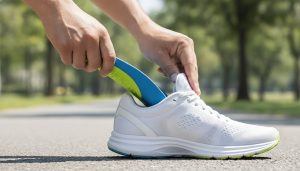
Standard shoe inserts often provide passive cushioning, which feels soft but does little for alignment. Medical-grade solutions like Powerstep insoles offer calibrated, firm support that prevents the arch from collapsing under physical stress. Similarly, Vionic shoes feature podiatrist-designed footbeds that integrate this structural integrity directly into the footwear. This active intervention reduces the constant tugging on the plantar fascia ligament. It’s a proactive way to manage the micro-trauma that leads to chronic heel pain and long-term mobility issues.
The Professional Advantage
For restaurant workers and medical professionals, arch support is a necessity rather than an option. Standing on hard tile for eight to twelve hours causes the muscles in the foot to weaken, leading to a gradual lowering of the arch throughout a shift. This cumulative strain is why your back might ache even if your feet feel “fine.” Aetrex orthotics address this by using memory foam combined with precise arch placement to ensure total skeletal alignment. If you’re ready to invest in your daily comfort, you can browse our professional orthotics collection to find a solution tailored to your specific arch height.
Your 2026 Blueprint for Lifelong Foot Health
Achieving feet for life requires more than just debunking common myths; it demands a structured approach to your daily habits and footwear choices. Your feet are the foundation of your mobility, and like any complex mechanical system, they require regular maintenance and the right components to function at their peak. Following a proactive blueprint ensures that you aren’t just reacting to pain, but preventing it before it starts.
- Step 1: Get a professional measurement every two years. Adult feet are not static. Gravity, age, and life changes mean your size today might not be your size in 2028.
- Step 2: Rotate your shoes daily. High-performance foams require 24 to 48 hours to fully decompress after a day of use. Alternating between two pairs can extend the functional life of both.
- Step 3: Match the shoe to the activity. A running shoe is built for forward momentum, a standing shoe needs lateral stability, and gym athletes can explore E-commerce sales of specialized bodybuilding and weightlifting footwear to secure a rigid, grounded base. Never use a specialized shoe for an activity it wasn’t designed to support.
- Step 4: Prioritize at-home recovery. Walking barefoot on hard surfaces like tile or hardwood can strain your fascia. Keep your arches supported even at home with high-quality slippers.
- Step 5: Replace footwear regularly. Most midsoles lose their structural integrity after 300 to 500 miles, or roughly every 6 to 12 months for daily wear.
Curating Your Footwear Wardrobe
A healthy wardrobe is a diverse one. You might rely on Brooks for your morning exercise while turning to the contoured cork footbeds of Birkenstock for afternoon recovery. During the winter, UGG boots and slippers are excellent for maintaining warmth and healthy circulation. For warmer months, brands like Olukai and Taos provide the necessary arch support in open-air styles, ensuring you don’t have to sacrifice your feet for life goals for summer fashion. Proper support is equally vital during developmental years, so if you are looking for comfortable, supportive footwear for students, check out Crabkids London.
The Feet for Life Commitment
We take our role as curators seriously, selecting only the top 1% of comfort and orthopedic brands for our inventory. Our focus is on providing shoes for foot pain that deliver functional, medical-grade support rather than temporary, pillowy softness. Investing in your mobility today is the most effective way to ensure you remain active and independent for decades to come. Your health starts from the ground up, and making informed decisions about your footwear is the first step toward a pain-free future.
Step Into a Pain-Free Future
Your journey toward lasting mobility starts with unlearning the misconceptions that have dictated your shoe choices for years. We’ve explored how structural stability outperforms simple softness and why a professional measurement is the only way to ensure a proper fit. By embracing the feet for life philosophy, you’re choosing to prioritize the health of your foundation over temporary trends. It’s a commitment to staying active, whether you’re navigating a twelve-hour nursing shift or enjoying a weekend walk.
Ready to take the next step? As an authorized retailer of top-tier brands like Brooks, Hoka, and Vionic, we specialize in solutions for healthcare and service professionals who demand more from their shoes. From expertly curated orthotics to performance-driven insoles, we provide the tools you need for total skeletal alignment. Shop our curated collection of health-focused footwear at Feet for Life and discover how the right support can transform your daily life. You deserve to move with confidence and comfort every single day.
Frequently Asked Questions
Is it better to have a shoe that is too big or too small?
It is generally better to have a shoe that is slightly too large than one that is too small. A tight shoe restricts blood flow and leads to conditions like bunions or neuromas. A shoe with extra room can often be adjusted with thicker socks or orthotics. However, the most effective way to maintain feet for life is to ensure a precise fit where your heel is locked in and your toes have ample room.
How do I know if I need a neutral or a stability shoe?
You can determine your needs by examining the wear patterns on your old shoes. If the inner edge of the sole is more worn, you likely overpronate and require a stability shoe to prevent inward rolling. If the wear is even or on the outer edge, a neutral shoe is usually appropriate. Stability shoes use firmer foam on the medial side to guide your gait, whereas neutral models focus on balanced impact protection.
Can I put Powerstep insoles in any type of shoe?
You can use Powerstep insoles in most closed-toe footwear that features a removable factory liner. It’s vital to remove the original insole first to prevent the shoe from becoming too shallow or cramped. These medical-grade inserts work best in structured shoes like Brooks or Dansko, providing a consistent level of support that factory liners often lack. They are an excellent tool for those seeking a feet for life approach to daily mobility.
Why do my feet hurt more when I walk barefoot at home?
Walking barefoot on hard surfaces like tile or hardwood forces your arches to absorb the full weight of your body without any mechanical assistance. This often leads to increased strain on the plantar fascia ligament. To mitigate this, consider using supportive recovery footwear such as Birkenstock sandals or Vionic slippers at home. These provide a contoured surface that maintains your foot’s natural shape even when you aren’t wearing traditional shoes.
Do expensive shoes like Hoka or Brooks really last longer?
Premium brands like Hoka and Brooks utilize advanced midsole polymers designed to retain their shape after thousands of compressions. While a budget shoe might feel soft initially, its foam often collapses permanently within weeks. High-quality footwear maintains its structural integrity and energy return for a significantly longer period. This investment ensures that your joints remain protected throughout the entire lifespan of the shoe, rather than just the first few miles.
How often should I replace my walking shoes for optimal health?
Most walking shoes should be replaced every 300 to 500 miles or approximately every six to twelve months. Even if the tread looks intact, the internal cushioning and support structures eventually fatigue and lose their effectiveness. You might notice increased fatigue in your legs or a dull ache in your arches when the shoes have reached their limit. Regular replacement is a small price to pay for preventing chronic alignment issues.
What is the best shoe brand for someone with high arches?
Individuals with high arches often find the most relief in brands like Brooks, Hoka, or Vionic. These manufacturers design shoes with deeper heel cups and more substantial arch profiles that fill the gap beneath a high-cavus foot. This contact is essential for distributing pressure away from the heel and the ball of the foot. Combining these shoes with Aetrex orthotics can further customize the fit to ensure total comfort during long periods of standing.
Can improper footwear cause back and hip pain?
Improper footwear is a leading contributor to back and hip pain through a process called the kinetic chain. When your feet aren’t properly supported, your ankles may roll inward or outward, forcing your knees and hips to rotate to maintain balance. This misalignment eventually places uneven stress on your lower back. Correcting your foundation with professional-grade footwear is often the first step in resolving persistent aches in your upper joints and spine.

Article by
Sandra Parker
Sandra Parker is part of the family ownership team behind Feet for Life, a family-owned comfort footwear retailer serving customers in Visalia and Bakersfield, as well as nationwide online.
With more than 20 years of involvement in the family footwear business, Sandra brings extensive experience in retail marketing, customer education, footwear trends, and product selection. She is passionate about helping customers find comfortable, stylish, supportive footwear for everyday life.
Through Feet for Life, Sandra shares practical footwear advice, seasonal shopping trends, and insights into trusted footwear brands.