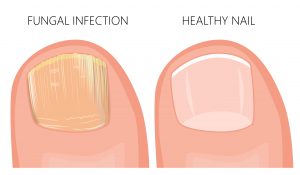

Toenail fungus, known by physicians as Onychomycosis, affects about half of Americans by the age of 70. It is relatively rare in children, but the incidence increases with age. Fungal infections occur when microscopic fungi gain entry through a minor trauma in the nail, then grow and spread in the warm, moist environment inside the patient’s socks and shoes.
Symptoms of toenail fungus, which several types of fungi can cause, include swelling, yellowing, thickening, or crumbling of the nail, streaks or spots down the side of the nail, and even complete loss of the nail. Toenail color can vary from brown or yellow to white with this condition. Fungal infections can affect the fingernails as well as the toenails, but toenail fungus is harder to treat because toenails grow more slowly. It occurs most often on the big or small toe but might occur on any toe.
Cause
Toenail fungus can be picked up in damp areas such as public gyms, shower stalls, or swimming pools, and can be passed among family members. Athletes and people who wear tight-fitting shoes or tight hosiery that cause trauma to the toes or keep the feet from drying out are at higher risk. The condition can also spread from one toe to another or other parts of the body.
Other risk factors include abnormal PH levels of the skin, not drying off the feet thoroughly after bathing or exercise, and a compromised immune system in someone who has been exposed to a fungus. People with diabetes have an increased risk of contracting a toenail fungus because their immune system is compromised. They should have their nails cut and debrided by a podiatrist.
Treatment and Prevention
Because it’s challenging to treat or eradicate toenail fungus, it’s a good idea to try to prevent it. It is helpful to wear protective shoes or sandals in public showers, pool areas, and gyms, and to avoid borrowing someone else’s shoes or sharing socks or towels with individuals who have toenail fungus. An orthotic device can be used to add cushioning and control over-pronation, support the longitudinal arch, and reduce stress on the lower leg muscles.
Wash your feet regularly, and dry them thoroughly when they get wet. Wearing nail polish on the toes is not recommended because it can trap fungus and allow it to grow. Keep toenails trimmed, and be sure to disinfect any pedicure tools before using them.
If you do develop toenail fungus, see your foot doctor. The doctor might remove as much of the nail as possible by trimming, filing, or dissolving it. Medicated nail polish might be prescribed for a localized infection, but an acute infection will likely be treated with a prescription oral antifungal medication. These medications can have side effects, so it is essential to work closely with your doctor to develop a personalized treatment plan. Only in severe cases will surgical removal of the nail be recommended.
If you suspect that you have toenail fungus, see your foot doctor.