
That cloud-like, squishy foam insole you just bought might actually be making your foot pain worse. While “extra cushion” sounds like the logical solution for tired feet, flat arches require structural integrity rather than just a soft place to land. If you’ve noticed your shoes wearing out unevenly or feel a persistent ache after a short walk, you’re likely dealing with the effects of overpronation. It’s a common struggle, and it’s exhausting to feel like your foundation is constantly shifting beneath you. Finding the right arch support insoles for flat feet is about more than temporary comfort; it’s about reclaiming your functional stability.
The right pair can realign your entire body, starting from the ground up. By choosing medical-grade support over simple padding, you can eliminate overpronation and turn your favorite shoes into orthopedic powerhouses. In this 2026 buyer’s guide, we’ll demystify the confusion between cushion and support. You’ll discover how specific brands like Powerstep and Aetrex provide the firm foundation needed for pain-free movement and better posture, ensuring you can stay active and comfortable all day long. Whether you’re at work or on the trail, the right support makes every step feel intentional and supported.
Key Takeaways
- Learn why flat feet require firm structural realignment rather than soft cushioning to manage overpronation and fatigue.
- Discover how professional-grade arch support insoles for flat feet use deep heel cups to stabilize your foundation.
- Compare leading brands like Powerstep and Aetrex. This helps you find the right balance of medical-grade support and daily comfort.
- Master the “removable insole” rule. It’s the simplest way to ensure your orthotics fit perfectly without creating painful pressure.
- Maximize your relief by pairing specialized insoles with neutral-cushion footwear from trusted names like Brooks and Hoka.
Understanding Flat Feet: Why Your Arches Need More Than Cushioning
Pes planus, commonly known as flat feet, is more than just a physical trait; it’s a biomechanical challenge. When the medial longitudinal arch collapses, the foot loses its ability to act as a rigid lever for propulsion. This structural failure leads to a condition called overpronation. As the arch flattens, the ankle rolls inward, placing excessive stress on the tendons and ligaments of the lower leg. Understanding the causes and mechanics of flat feet is the first step toward finding a lasting solution for your daily comfort.
This misalignment creates a “kinetic chain” effect that travels upward through your body. If your foundation is unstable, your knees, hips, and lower back must compensate for the lack of balance. Distinguishing between flexible flat feet, where an arch is visible when the foot is unweighted, and rigid flat feet, where the arch remains flat regardless of position, is essential for choosing the right support. Both types benefit significantly from the stability provided by high-quality arch support insoles for flat feet, which help restore a more natural alignment.
The Difference Between Low Arches and Fallen Arches
While some people are born with naturally low arches, others develop “fallen arches” later in life due to repetitive strain. This is often referred to as adult-acquired flatfoot deformity. The medial longitudinal arch is designed to be your body’s primary shock absorber, dispersing the impact of every step you take. When age or activity weakens the posterior tibial tendon, this shock absorption fails. Overpronation serves as the primary cause of secondary foot injuries like plantar fasciitis. If chronic pain or tendon issues begin to limit your daily mobility, check out Active Foot Care for comprehensive podiatry services that target the root cause of discomfort.
Why Standard Shoe Liners Fail Flat Feet
Many people fall into the “Memory Foam Trap” when seeking relief from foot pain. Soft, squishy inserts feel wonderful for the first few minutes, but they offer zero structural support. They simply compress under your weight, allowing your arch to collapse just as it did before. Factory insoles found in most sneakers are typically made of flimsy foam that lacks the rigidity to stop the foot from rolling inward during a stride.
To achieve real results, you need a firm “cradle” that maintains proper bone alignment. Effective arch support insoles for flat feet provide a solid base that engages the foot’s natural mechanics. Without this structural integrity, your shoes can’t protect you from the long-term wear and tear caused by an unsupported gait. Choosing professional-grade solutions ensures your feet have the stable foundation they need for all-day wellness.
Structural Support vs. Cushioning: Finding the Right Foundation
Many people assume more padding equals more relief. For those with flat feet, comfort is actually a byproduct of stability. A key feature to look for is the deep heel cup. This structural element cradles the fatty tissue under the heel bone; it prevents the lateral shifting that leads to overpronation. Without this rearfoot control, even the most expensive arch support insoles for flat feet will fail to provide lasting realignment.
Choosing the right arch height is equally vital. If you have flexible flat feet, your arch might reappear when you sit down. In this case, a semi-rigid support can help maintain that shape during movement. For those with rigid flat feet, the goal is often pressure redistribution rather than forcing a high arch where one doesn’t exist. Following MedlinePlus guidance on flat feet, conservative treatment often starts with these types of supportive modifications to reduce strain on the soft tissues.
Materials play a significant role in how long your support lasts. While EVA foam provides a nice initial feel, it lacks the longevity of a semi-rigid polypropylene shell. A firm base is required to engage the windlass mechanism. This is the way your foot naturally tightens and arches during the push-off phase of a step. High-quality arch support insoles for flat feet prioritize this structural integrity over mere softness.
Firm Support: The Key to Realignment
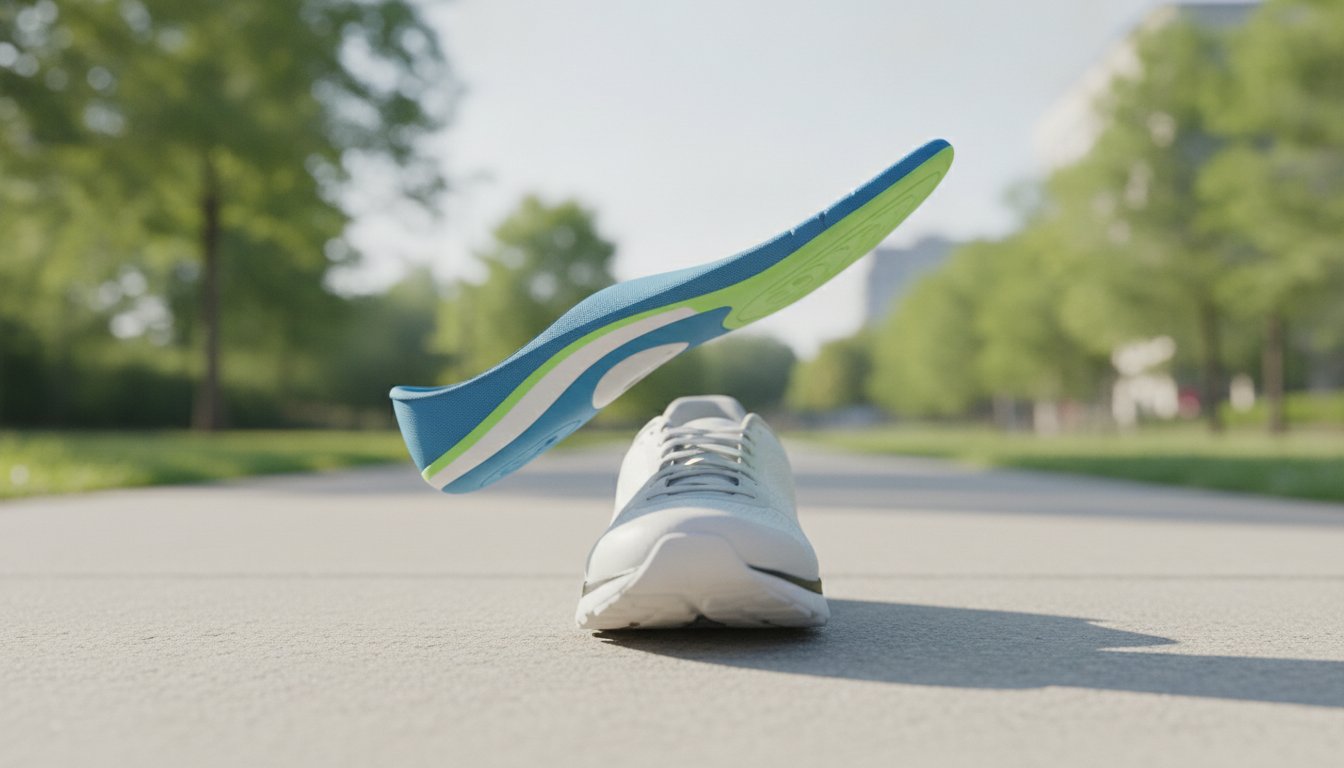
Medical-grade insoles like Powerstep use a calibrated shell to stop the arch from collapsing mid-stride. This creates “Total Contact” support, meaning the insole touches the entire bottom of your foot. By filling the gap between your foot and the shoe, these devices distribute pressure evenly; this prevents hot spots and localized pain. Soft supports often fail because they compress too easily. This lack of resistance can actually worsen muscle tiredness over long distances.
Cushioning as a Secondary Benefit
Cushioning still has a role, but it should be strategic. High-quality orthotics place padding in the forefoot and heel strike zones where impact is highest. This balance allows for energy return while the firm shell maintains stability. If you’re looking to upgrade your entire setup, pairing these insoles with the Best Shoes for Foot Pain: 2026 Guide to Relief can create a comprehensive stability system. Exploring professional-grade orthotics is a great way to start your journey toward pain-free movement.
Comparing Top Arch Support Insoles for Flat Feet in 2026
Choosing the right arch support insoles for flat feet often comes down to the specific needs of your unique gait. While mass-market retail brands focus on generic comfort, medical-grade options provide targeted biomechanical correction. Understanding the types and benefits of shoe orthotics helps you distinguish between simple padding and functional support that actually realigns your foot. In 2026, the focus has shifted toward materials that offer both high energy return and uncompromising stability.
Durability is a major factor that separates professional brands from drugstore alternatives. While retail inserts often lose their shape within a few months, professional-grade insoles are designed to withstand daily use for six to twelve months. This longevity is essential for maintaining a consistent foundation and preventing the return of overpronation symptoms. Investing in a higher quality support system ultimately saves you from the cycle of frequent replacements and recurring foot fatigue.
Powerstep: The Gold Standard for Stability
Powerstep is frequently cited by specialists as a top choice for those struggling with the effects of a collapsing arch. Their Pulse and Pinnacle series are specifically engineered for overpronators who need a firm, reliable base. Unlike flimsy inserts, Powerstep Insoles: Enhancing Your Favorite Shoes combine a rigid, calibrated shell with dual-layer cushioning. This combination ensures your arch doesn’t collapse during the gait cycle while still providing the shock absorption needed for hard surfaces.
Aetrex: Precision Placement for Flat Feet
Aetrex takes a more personalized approach to arch support by designing specific models for low-arch users who require rearfoot stability. Their orthotics often feature a memory foam topper that contours to the foot without sacrificing the firm support underneath. One standout feature is the use of copper-infused top covers; these provide anti-microbial protection and help manage hygiene during long days on your feet. When selecting Aetrex, you can choose between “posted” models, which feature a slight slant to correct severe inward rolling, or “neutral” versions for more moderate support needs.
Vionic also remains a leader in this space with their Orthaheel technology. While they offer excellent removable inserts, many users appreciate their shoes with built-in support for occasions where a separate insole isn’t practical. Whether you choose a stand-alone orthotic or a specialized shoe, the goal remains the same: providing the structural integrity your flat feet can’t provide on their own.
The Buyer’s Checklist: Matching Insoles to Your Shoes and Activity
Selecting the best arch support insoles for flat feet is only half the battle. If you don’t integrate them correctly into your daily footwear, you won’t experience the full benefits of realignment. The most critical guideline is the “Removable Insole” rule. You must always take out the factory liner that came with your shoes before inserting your new orthotics. Leaving both in creates a cramped environment; this can lead to blisters, numbness, and excessive pressure on the top of your foot.
Your activity level should also dictate your choice. If you’re running or walking long distances, you’ll need an insole with high energy return and durable cushioning. For those who stand all day on hard surfaces, such as nursing or restaurant professionals, the focus should be on maximum shock absorption and rearfoot stability. Matching the insole’s rigidity to your specific daily demands ensures that your feet remain energized rather than exhausted by the end of the day.
Fitting Your Insoles into Different Shoe Types
Volume refers to the amount of space inside your shoe. High-volume shoes, such as neutral-cushion models from Brooks or Hoka, typically have plenty of room for full-length arch support insoles for flat feet. These provide maximum coverage and prevent the insole from sliding during movement. In contrast, low-volume dress shoes or casual loafers often require a 3/4 length insole. These stop just before the ball of the foot, allowing your toes to move freely in tighter spaces without feeling pinched.
If you choose a full-length model, you might need to trim it for a precision fit. Use your old factory liner as a template. Trace the outline onto your new insole and use sharp scissors to remove the excess material from the toe area. This simple step ensures the arch support sits exactly where it’s supposed to under your medial longitudinal arch.
The Transition Phase: What to Expect
Switching from flat shoes to medical-grade support is a significant change for your anatomy. During the first three days, it’s common to feel a “tennis ball” sensation under your arch. This isn’t a sign that the insole is the wrong size; rather, it’s the feeling of your arch being held in its correct, functional position for the first time in years.
To safely transition, follow a gradual wear schedule. Start with just two hours on the first day. Increase this by one or two hours each subsequent day until you can comfortably wear them for a full eight-hour shift. Structural soreness is normal as your muscles and tendons realign to a healthy position. Ready to find your perfect match? Explore our curated selection of orthotics and supportive footwear to start your journey toward pain-free movement today.
Maximizing Relief: Pairing Insoles with the Right Footwear
Even the most advanced arch support insoles for flat feet can’t compensate for a shoe that has lost its structural integrity. Think of your shoe as the chassis of a car; if the frame is bent, a new set of tires won’t fix the alignment. A “dead” shoe with a compressed midsole or a collapsed heel counter provides an unstable base, forcing your insole to work twice as hard. For maximum efficacy, you should pair your orthotics with footwear that offers its own inherent stability and high-quality materials.
A common question is whether to use a neutral or a stability shoe as your foundation. When you’re adding a firm, medical-grade insole, a neutral-cushion shoe is often the best choice. This creates a “Stability System” where the shoe provides the shock absorption and the insole provides the corrective alignment. Combining a rigid orthotic with a stability shoe that has a heavy medial post can sometimes lead to over-correction, which might cause your foot to roll too far outward. Knowing when to replace your gear is just as vital; if you see deep wrinkles in the midsole foam or the tread is worn smooth on one side, it’s time for a fresh start.
The Power of Brooks and Hoka for Flat Feet
Brooks and Hoka are renowned for their ability to work in tandem with arch support insoles for flat feet. Brooks shoes often feature DNA Loft cushioning, which provides a soft landing without feeling mushy. This complements the rigid shell of an orthotic perfectly, allowing for a smooth transition from heel to toe. Similarly, Hoka’s “Active Foot Frame” acts like a bucket seat for your foot, cradling the heel and midfoot to enhance the stability provided by your insert. You can learn more about these options in The Ultimate Guide to Brooks Running & Walking Shoes: 2026 Edition.
Vionic and Birkenstock: Built-in Support Alternatives
There are times when a separate insole isn’t practical, such as during the summer or while relaxing at home. In these cases, shoes with built-in support are the ideal alternative. Vionic utilizes Orthaheel technology to provide a contoured footbed directly in the shoe, while Birkenstock uses a natural cork-latex blend that molds to your foot over time. These brands ensure you never have to sacrifice alignment for style, even in sandals or slippers. For a deeper dive into performance footwear, check out Hoka vs. Brooks: Which 2026 Running and Walking Shoe is Best? to see which brand fits your specific lifestyle and needs.
Moving Toward Pain-Free Mobility
Achieving long-term comfort for flat feet isn’t about finding the softest foam; it’s about establishing a stable, structural foundation. You now know that firm realignment is the only way to effectively manage overpronation and protect your kinetic chain from the ground up. By combining professional-grade support with neutral-cushion footwear, you’ve created a personalized stability system that turns every step into a healthy one.
Selecting the right arch support insoles for flat feet is a vital investment in your overall well-being. At Feet for Life, we specialize in structural foot health solutions that bridge the gap between medical expertise and everyday lifestyle needs. Our team provides expert fitting guidance to ensure you find the perfect match among our podiatrist-recommended brands.
Your journey to better posture and pain-free movement starts with a single, supported step. We’re here to help you walk with confidence again.
Frequently Asked Questions
Do arch support insoles actually fix flat feet permanently?
Arch support insoles for flat feet don’t permanently change the bone structure of your foot or “cure” the condition. Instead, they act as functional tools that provide the necessary alignment and support while you’re wearing them. By maintaining the medial longitudinal arch, they prevent overpronation and reduce strain on your tendons during daily activity. Think of them like eyeglasses; they correct your foundation while in use but don’t alter your underlying anatomy.
How do I know if I have ‘flexible’ or ‘rigid’ flat feet?
You can distinguish between these types by performing a simple weight-bearing test at home. If an arch is visible while you’re sitting but disappears the moment you stand up and put weight on your feet, you have flexible flat feet. If your foot remains flat regardless of whether you’re standing or sitting, the condition is considered rigid. Flexible flat feet typically respond very well to the structural realignment provided by semi-rigid, professional-grade insoles.
Can I put arch support insoles in any type of shoe?
While you can use arch support insoles for flat feet in many different shoes, the fit depends heavily on the shoe’s internal volume. Full-length insoles work best in athletic or work shoes with removable liners, such as those from Brooks or Hoka. For dress shoes or footwear with lower profiles, a 3/4 length insole is often a better choice. Always ensure the shoe has enough depth to accommodate the added height of the support without pinching.
How often should I replace my arch support insoles?
Most professional-grade insoles should be replaced every six to twelve months, depending on your activity level and body weight. You should check for signs of wear such as visible cracks in the support shell, compressed foam, or a return of your previous foot pain. If you walk or run daily, the materials will break down faster. Replacing them regularly ensures you maintain the structural integrity needed to prevent arch collapse and painful overpronation during your stride.
Will arch support insoles help with my knee and back pain?
Yes, providing proper support for your feet can significantly reduce pain in your knees, hips, and lower back. When your arches collapse, your ankles roll inward, which forces your knees and hips to misalign to compensate. This “kinetic chain” effect places undue stress on your entire skeletal system. By stabilizing your foundation with a firm arch support, you restore natural alignment and relieve the pressure on these higher joints, leading to better posture.
Is it better to get custom orthotics or ready-made insoles like Powerstep?
Is it better to get custom orthotics or ready-made insoles like Powerstep?
For many people, ready-made medical-grade insoles like Powerstep provide sufficient support at a fraction of the cost of custom options. Custom orthotics are typically reserved for severe deformities or specific medical requirements handled through clinical procedures; for complex biomechanical needs, dedicated podiatry and rehabilitation practices like Footfall Health can provide in-depth gait analysis and care. Feet for Life focuses on professional-grade, ready-made solutions that offer immediate relief. These products use calibrated shells that mimic the support found in custom designs, making them an excellent first step for managing daily flat foot discomfort.
Should I buy a stability shoe or a neutral shoe if I’m using an insole?
We typically advise pairing your insoles with a neutral-cushion shoe from trusted brands like Brooks or Hoka. Stability shoes already have built-in support features, such as medial posts, which can conflict with the shape of your insole. This combination might lead to over-correction and unnecessary discomfort. A neutral shoe provides a flat, cushioned base that allows the insole to perform its specific job of realigning your arch without interference from the shoe’s own structural elements.
Why do my new insoles feel uncomfortable in the beginning?
It’s normal for new insoles to feel strange because they’re physically moving your bones and tendons into a new position. Your muscles have likely spent years compensating for a collapsed arch, and they need time to adjust to this healthy alignment. This is why we recommend a two-week break-in period. Start by wearing them for just two hours a day and gradually increase the time as your feet become accustomed to the firm support.

Article by
Sandra Parker
Sandra Parker is part of the family ownership team behind Feet for Life, a family-owned comfort footwear retailer serving customers in Visalia and Bakersfield, as well as nationwide online.
With more than 20 years of involvement in the family footwear business, Sandra brings extensive experience in retail marketing, customer education, footwear trends, and product selection. She is passionate about helping customers find comfortable, stylish, supportive footwear for everyday life.
Through Feet for Life, Sandra shares practical footwear advice, seasonal shopping trends, and insights into trusted footwear brands.